
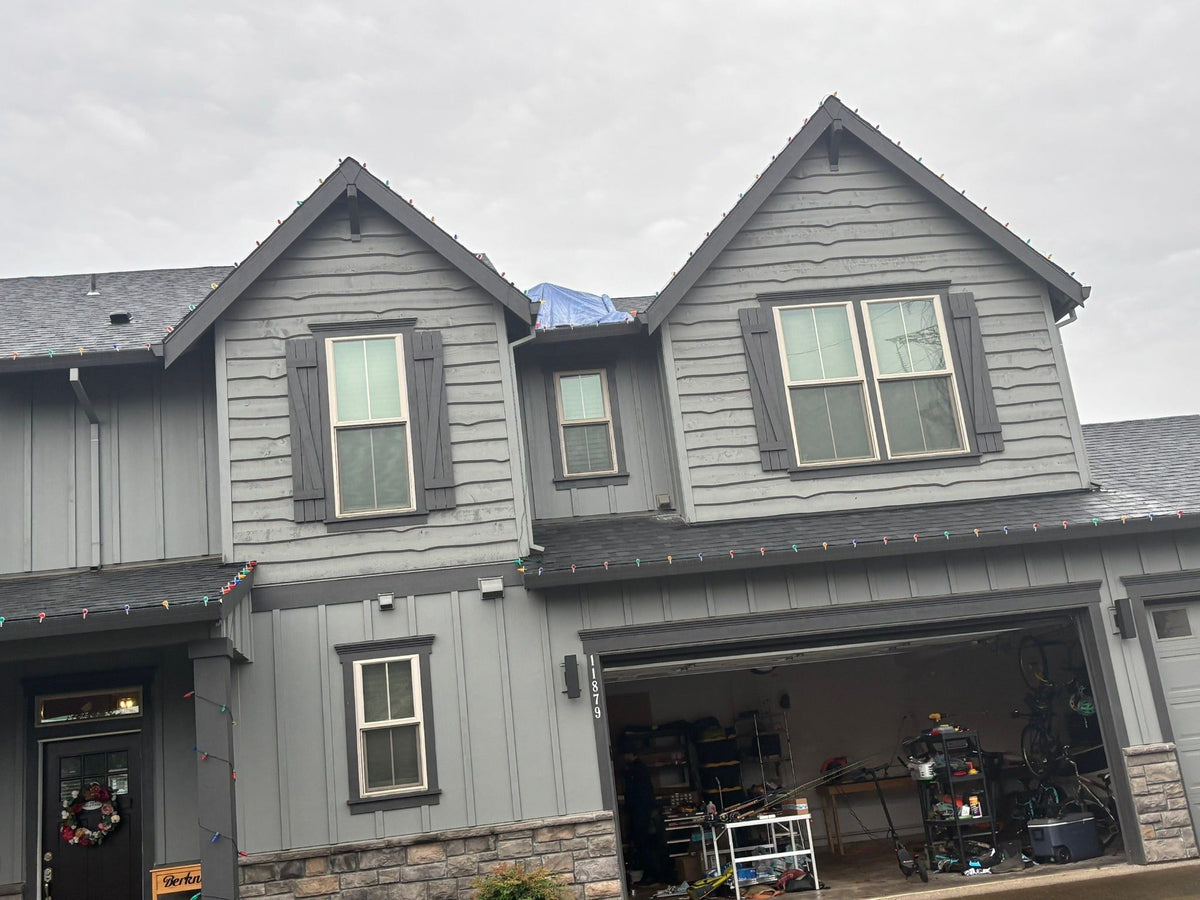
When Oregon's rainy season arrives, the calls start coming in. Homeowners notice water stains on their ceilings, moisture in their garages, or even water dripping into their living rooms.
Naturally, the first thought is usually that the roof is leaking.
But after years of inspecting roofs throughout the Portland metro area, I've learned that water showing up inside your home doesn't always mean your roofing system has failed.
Sometimes it's condensation from poor attic ventilation. Sometimes it's a deteriorated pipe boot, failed sealant, or exposed fastener. Other times, it's poor workmanship that has gone unnoticed until heavy rain reveals it.
And sometimes the shingles themselves are perfectly serviceable.
Our approach at Peak Exteriors: Find out what's actually happening before recommending a repair or roof replacement. A water stain doesn't automatically mean you need a new roof.

Not Every Ceiling Stain Means Your Roof Is Leaking
One of the problems we encounter during Oregon's rainy season is moisture buildup associated with inadequate attic ventilation.
When temperatures drop outside and warm, moisture-laden air reaches cold surfaces in the attic, condensation can develop.
If the attic isn't properly ventilated or moisture is entering from the living space, that condensation can accumulate on the underside of the roof sheathing. In some cases, it eventually drips or causes staining on interior drywall.
Homeowners might notice ceiling stains, moisture in the garage, or occasional dripping.
It looks like a roof leak, but the source could be condensation rather than rainwater coming through the roofing material.
That's an important distinction because replacing shingles won't necessarily fix an attic moisture problem.
Why We Inspect the Attic
At Peak Exteriors, an attic inspection is part of our roofing evaluation process when the space is safely accessible.
The attic tells us a tremendous amount about what's happening with the roof.
We're looking at the roof sheathing, ventilation, moisture conditions, and evidence of water intrusion.
One thing homeowners often don't realize is that the place where water appears inside the home may be nowhere near where it entered the roof.
We've tracked water that traveled 20 feet or more along framing before eventually dripping through a ceiling.
That's why we don't automatically assume the leak is directly above the stain. We start by tracking the source.
The Most Common Roof Leak Problems We Find
There are several recurring problems we see during roof inspections, and some of them are surprisingly simple.
1. Failed Pipe Boots and Plastic Roof Vents
This is a big one.
Many roofing systems use entry-level accessories such as plastic roof vents and galvanized pipe boots with rubber seals.
In my experience, these components are responsible for a large percentage of the leak calls we receive.
I often start seeing problems with lower-cost accessories around the ten-year mark, although actual lifespan varies depending on the product, installation quality, and exposure.
Rubber seals can deteriorate, plastic vents can become damaged, and the components that once kept water out may no longer perform properly.
The frustrating part is that the shingles themselves might still have years of useful life left.
A homeowner could have an otherwise serviceable roof with one relatively small component allowing water into the attic.
That's why we pay attention to the entire roofing system, not just the shingles.
2. Exposed Fasteners and Failed Sealant
Another common issue involves exposed fasteners.
These can be found around roof vents, certain flashing details, and other areas where roofing components are mechanically secured.
If those fasteners aren't properly sealed where required, or the sealant deteriorates, water can find its way into the roof assembly.


During inspections, we check these vulnerable areas and identify fasteners or seals needing attention.
Sometimes straightforward maintenance can help prevent a much larger problem.
3. Missing, Lifted, or Wind-Damaged Shingles
Oregon's winter storms can bring strong winds.
We've encountered roofs where previous repairs weren't properly secured, allowing shingles to lift or blow off during heavy winds.
Once shingles are displaced, the roof becomes more vulnerable to water intrusion.
A shingle that hasn't properly bonded or been secured can become a problem when the next major storm arrives.
If homeowners notice missing or lifted shingles from the ground, we recommend scheduling an inspection.
Don't attempt to inspect or repair a wet roof yourself.

4. Moss Buildup and Neglected Maintenance
Moss is another problem we encounter constantly in the Pacific Northwest.
When moss becomes established on asphalt shingles, it can retain moisture, interfere with drainage, and contribute to roofing deterioration.
Heavy moss growth can also lift shingle edges, increasing the potential for water intrusion at vulnerable areas.
Not every moss-covered roof is leaking, but neglecting substantial growth can create larger maintenance problems over time.
A Three-Year-Old Roof That Was Already Leaking
One project from last year really stands out.
We received a call about a relatively new home, only around three or four years old, that had developed leaks in multiple locations.
You wouldn't expect a roof that new to be experiencing those kinds of problems.
We started with an attic inspection to track where the water was entering. Then we went onto the roof to investigate.
What we found was disappointing.
There were exposed fasteners in multiple areas, along with tears and damage to roofing materials that appeared consistent with rough handling during installation.

The workmanship simply wasn't what it should have been.
We also found problems with several plastic roof vents. Some were already allowing water intrusion despite being only a few years old.
We replaced the affected plastic roof vents and addressed the installation defects we identified.
The lesson: The age of a roof doesn't always tell you how well it was installed. A newer roof can have problems if important installation details were overlooked.
Do You Need a New Roof or Just a Repair?
I get calls all the time from homeowners who are convinced they need a roof replacement.
They'll tell me, "Hey, I think it's time for a new roof."
Then we inspect it, and sometimes the roof really isn't in bad shape.
It may need a thorough cleaning, maintenance around exposed fasteners, flashing repairs, or replacement of worn accessories.
Sometimes Ridge Caps Need Attention First
We've also encountered roofs where the hip and ridge cap shingles were deteriorating before the rest of the roofing system.
These components are bent over the hips and ridges and can experience wear differently from the field shingles.
In some cases, replacing damaged ridge caps can be an appropriate localized repair.
Of course, when shingles are deteriorating throughout the roof, installation defects are widespread, or underlying materials are significantly damaged, replacement may be the better recommendation.
Our goal isn't to sell someone a new roof when they don't need one.
Our goal is to identify the problem and recommend the work that's actually needed.

What If Your Roof Starts Leaking During a Storm?
The first priority is protecting people and limiting additional interior damage.
Avoid affected electrical fixtures and outlets, and move belongings away from the wet area if you can do so safely.
If the ceiling is sagging or water is collecting near electrical equipment, stay clear and seek appropriate emergency assistance.
Then contact a qualified roofing contractor.
At Peak Exteriors, we have crews equipped to provide emergency roof protection, including temporary tarp installations when conditions and access allow.
Emergency Tarping and Storm Damage


Tree impacts, displaced roofing materials, and active water intrusion may require temporary protection before permanent repairs can be completed.
Why We Start by Tracking the Water
Usually, we'll send an estimator or technician to inspect the problem, including the attic when it is safe and accessible.
Water often enters higher up on the roof, travels along framing, and eventually becomes visible inside the home.
If you repair only the area directly above the ceiling stain, you might miss the actual source of the leak.
Can Roof Repairs Be Done in the Rain?
Sometimes, yes. But there are limits.
Wind, rain, roof pitch, surface conditions, and the type of repair all affect whether work can be performed safely.
Strong winds are a particular concern, especially when working at heights or handling large tarps.
We evaluate conditions, use appropriate fall protection, and determine whether temporary protection or repair work can proceed safely.
Some work must wait until conditions improve. No repair is worth putting someone in danger.
What Can Homeowners Look for From the Ground?
The reality is that it's difficult for homeowners to determine the condition of a roof from the ground.
Many problems aren't visible without a closer inspection.
But there are a few warning signs worth watching for:
- Missing shingles after a windstorm
- Shingles that appear lifted or displaced
- Heavy moss buildup
- Visible damage around roof penetrations
- New staining on ceilings or walls
- Moisture or dripping in the garage or attic
These symptoms don't automatically mean you need a replacement.
They do mean it's worth investigating.
Why Our Roof Cleaning Service Goes Beyond Moss Removal
One of the biggest things I want homeowners to understand is that roof maintenance should be more than simply removing dirt and moss.
When Peak Exteriors performs a roof cleaning, our goal is to help homeowners understand the condition of their roofing system.
Our service includes cleaning the roof and gutters, addressing moss growth, and applying moss treatment to help control future growth.
But we also inspect the important details.
We're looking at flashing, roof vents, exposed fasteners, pipe boots, and ridge caps.
Where appropriate, we address exposed fasteners needing resealing and identify other maintenance concerns.
If we find deteriorating ridge caps or accessories that should be replaced, we explain those findings to the homeowner.
At the end, we provide a report documenting what we found and any additional maintenance we recommend.
We don't want to simply clean a roof, collect payment, and walk away. We want to be an ongoing resource for homeowners so they understand the condition of their roof and can make informed decisions.
A roof cleaning can't guarantee a leak-free winter, but it's an opportunity to catch visible problems before they become larger repairs.
Frequently Asked Questions About Roof Leaks in Oregon
Why does my ceiling have water stains when my roof looks fine?
Water stains can result from roof leaks, attic condensation, plumbing leaks, or other moisture sources. An inspection helps identify the cause.
How long do roof pipe boots and plastic vents last?
Lifespan varies by material, installation quality, and exposure. In our experience, lower-cost roofing accessories commonly show deterioration around ten years, although some fail earlier and others last longer.
Can moss cause a roof to leak?
Heavy moss growth can retain moisture, interfere with drainage, and contribute to shingle deterioration. Substantial growth should be addressed using cleaning methods appropriate for the roof material.
Can you repair a roof during Oregon's rainy season?
Some emergency protection and repairs can be performed during wet weather. Safety conditions, roof pitch, the type of repair, and product installation requirements determine what is possible.
Should I replace my roof if it's leaking?
Not necessarily. A leak caused by a failed pipe boot, damaged flashing, or another localized problem may be repairable. A thorough inspection helps determine the best approach.
Concerned About Your Roof This Rainy Season?
Peak Exteriors helps homeowners throughout Portland, Tualatin, Lake Oswego, West Linn, Sherwood, Newberg, and surrounding Oregon communities identify roofing problems and understand their repair options.
Whether you're dealing with an active leak, overdue roof maintenance, or simply want to know how your roof is holding up, we're happy to take a look.
Our approach starts with understanding the condition of your roof, not assuming it needs to be replaced.
Schedule a Roofing Inspection Explore Our Roofing ServicesPeak Exteriors — Raising Standards to the Highest Peak.